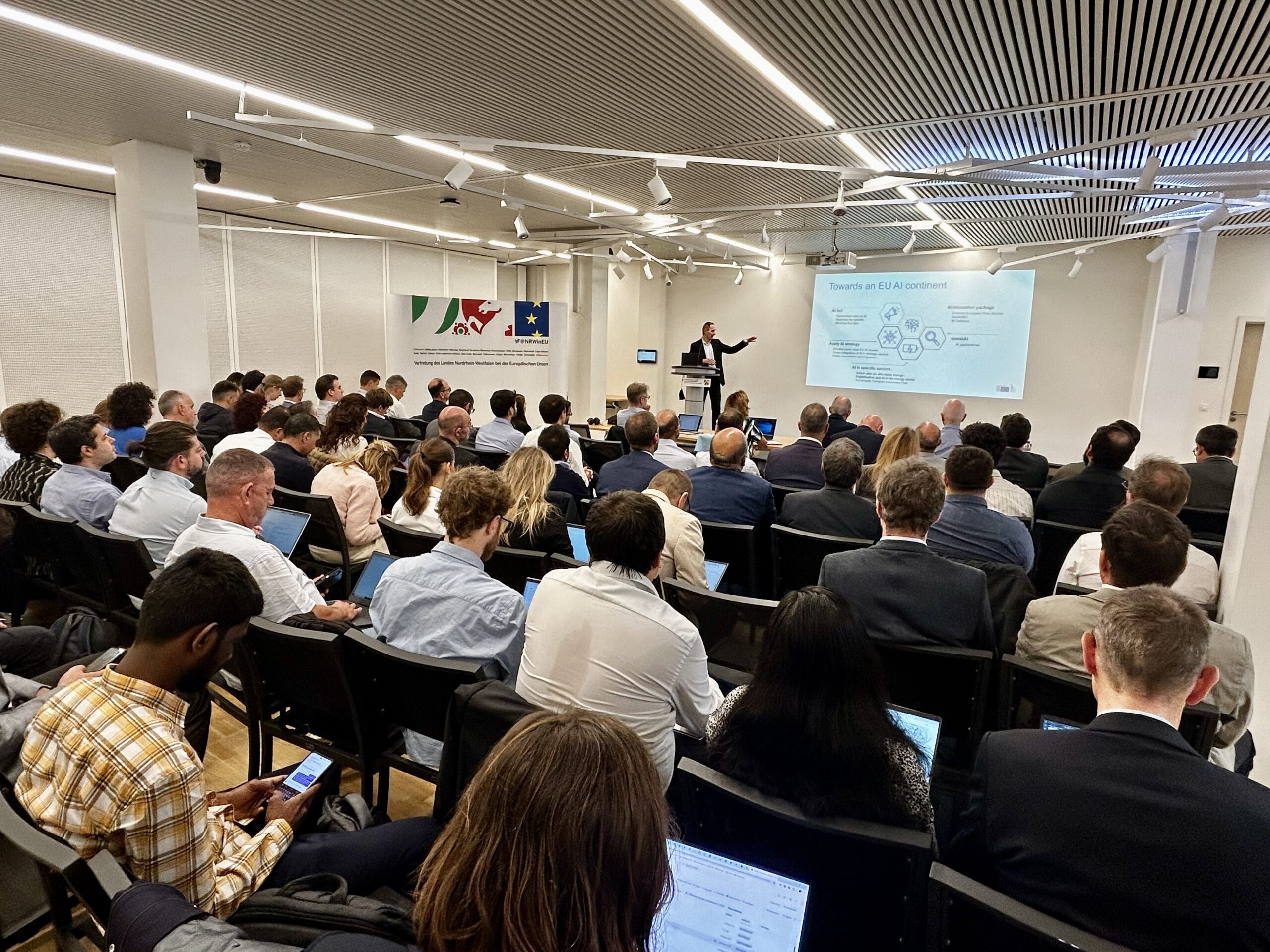
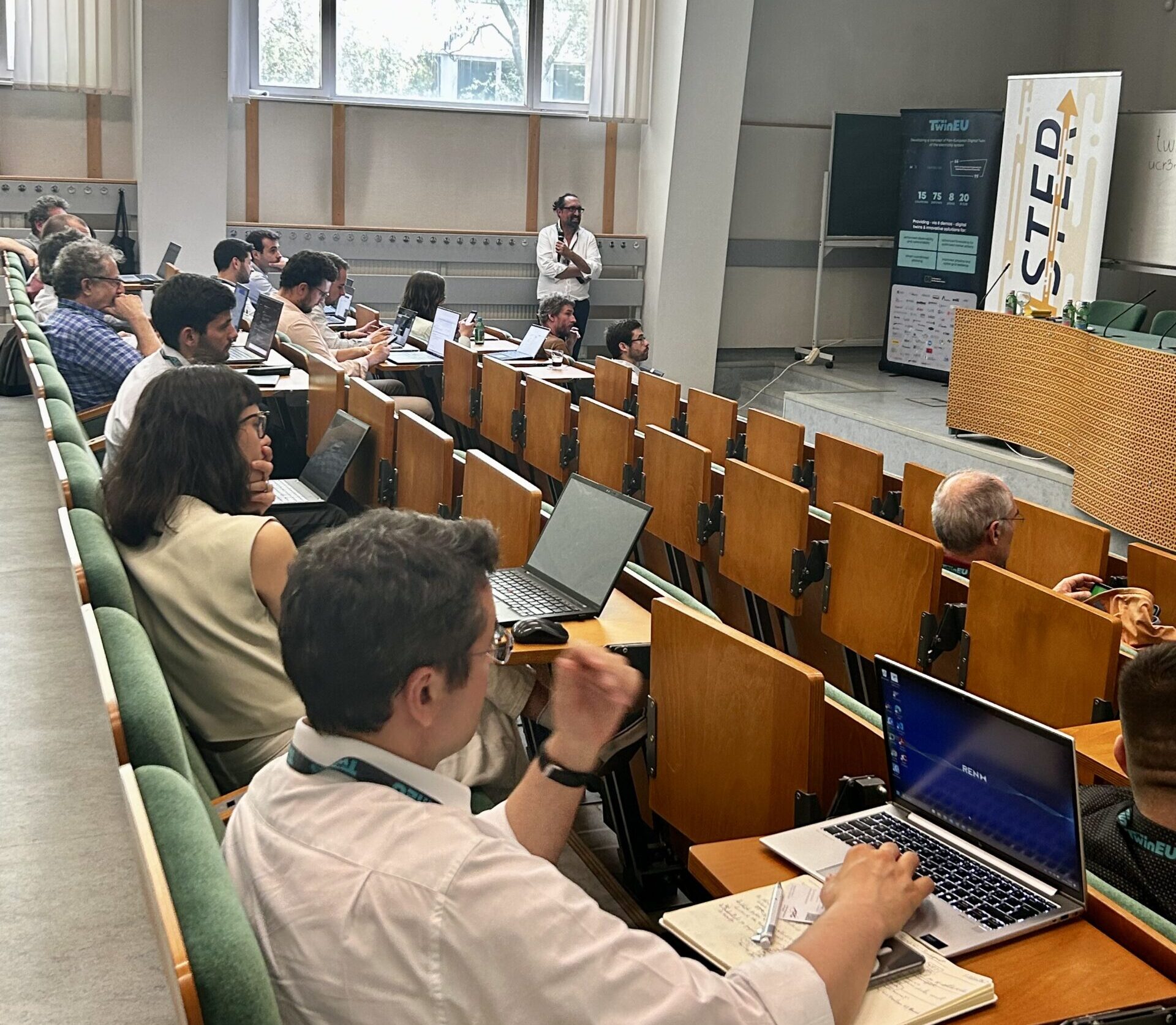
A new joint white paper by TwinEU, ORION, HEDGE-IoT and ECLIPSE DIGITAL explores how semantic interoperability can help connect independently developed Digital Twins and data ecosystems across Europe’s energy sector.
As Digital Twins and energy data spaces develop, technical connectivity alone is not enough. Different systems must also be able to understand and interpret the information they exchange, regardless of their underlying data models, standards or architectures.
Addressing this challenge, TwinEU has joined forces with three European projects – ORION, HEDGE-IoT and ECLIPSE DIGITAL – to produce a white paper entitled Semantic Interoperability for Federated Digital Twins in the Energy Domain: Lessons, Gaps, and a Roadmap.
The four projects bring complementary experiences: TwinEU focuses on federated Digital Twins of the electricity system; ORION on integrating heterogeneous energy data and models; HEDGE-IoT on IoT and edge-to-cloud interoperability; and ECLIPSE DIGITAL on interoperability for energy consumer applications.
Their joint analysis identifies several recurring challenges, including the heterogeneous adoption of semantic models, data-to-model mapping, cross-domain interoperability, persistent asset identification and the governance of semantic resources.
A key conclusion is that the solution does not lie in creating one universal ontology or imposing a common Digital Twin implementation. Instead, the paper advocates reusing and extending established standards, developing controlled, use-case-driven mappings between domain models, and making semantic models, mappings and validation rules governed and reusable assets of federated architectures.
As professor Antonello Monti, TwinEU project coordinator, explains:
The main conclusion is that semantic interoperability should become an explicit capability of federated Digital Twin and Data Space architecture. Rather than defining a single common ontology or Digital Twin implementation, the proposed approach is to reuse and extend established standards, introduce controlled and use-case-driven mappings between domain models, develop reusable interoperability profiles, and manage semantic models, mappings and validation rules as governed federation assets. This means moving towards a governed semantic ecosystem for federated Digital Twins, shifting from organization-centric to ecosystem-level interoperability and favoring federation over centralization.
The white paper also proposes a roadmap extending beyond the projects’ lifetimes: assessing existing models and gaps in the short term, developing reusable interoperability solutions for 2028–2030, and establishing long-term governance mechanisms beyond 2030.
By combining their findings and practical experiences, TwinEU and its partner projects contribute to the foundations of a more connected and interoperable European Digital Twin ecosystem.